Calculate the total capital before making an offer
CebuPropertyMan · Published 11 October 2026
Your purchase price is only one component of the investment. The useful comparison is between the foreclosed asset’s total cost of becoming usable and the cost of an alternative property that already meets your needs.
Build the cost schedule line by line
Include acquisition, transfer and documentation expenses, inspection and professional fees, repairs, fit-out, holding expenses, financing costs and a reserve. Assign responsibility for arrears and transaction charges according to the actual sale terms. Ask a qualified tax professional to verify applicable taxes, taxable bases and liabilities; do not automatically apply the tax assumptions used in a private-owner sale to a bank asset.
BPI’s FAQ identifies buyer-borne transfer and registration costs and makes financing subject to separate approval. Its detailed sale terms allocate additional items. Obtain a current written computation for your property rather than treating a generic fee allowance as a statutory calculation. [7]
A teaching example in Cebu
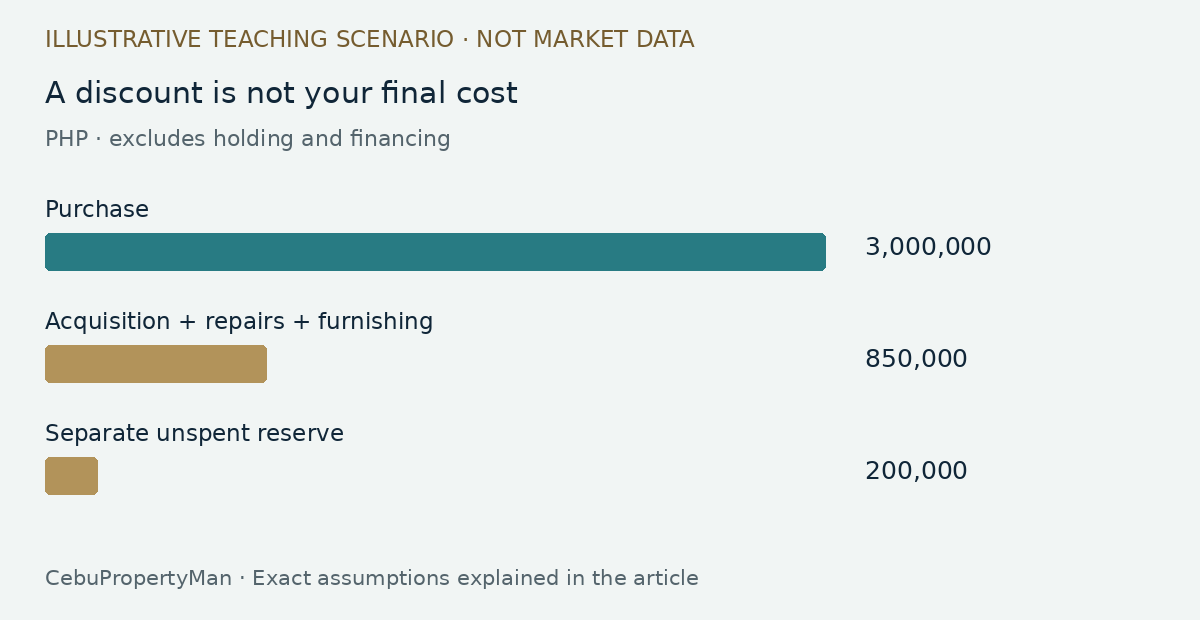
The figures below are illustrative allowances, not a bank quotation or tax assessment.
| Item | Illustrative amount |
|---|---|
| Purchase price | PHP 3,000,000 |
| Acquisition fees and professional work | PHP 250,000 |
| Repairs | PHP 450,000 |
| Furnishing and preparation for use | PHP 150,000 |
| Expected investment cost before holding and financing | PHP 3,850,000 |
| Separate unspent contingency reserve | PHP 200,000 |
| Initial funding budget before holding and financing | PHP 4,050,000 |
If a comparable usable property can genuinely be purchased for PHP 4.3 million, the apparent PHP 1.3 million price gap has narrowed sharply. Your funding requirement is already PHP 4.05 million before financing and holding expenses. That remaining difference must justify the effort and uncertainty.
An unspent reserve is money you need available, not an expense already incurred. Keep it in your funding budget; add actual expenditures to the cost basis as they occur. Do not count the same expense twice in purchase costs, holding costs and financing costs.
Decide what you can afford to lose
Ask what happens if repairs exceed the estimate, transfer takes longer, or the property produces no income for six additional months. Your capital plan should survive those conditions without forced selling or missed debt payments. If you have funds only for the down payment, you may not have funds for the investment.
Write a maximum offer based on the verified exit value or income, all expected costs and the margin you require. The bank’s asking price is a negotiating reference; it is not your investment valuation.
Sources and verification
Source statements checked 11 October 2026. The specific bank sale contract and current law govern the transaction.